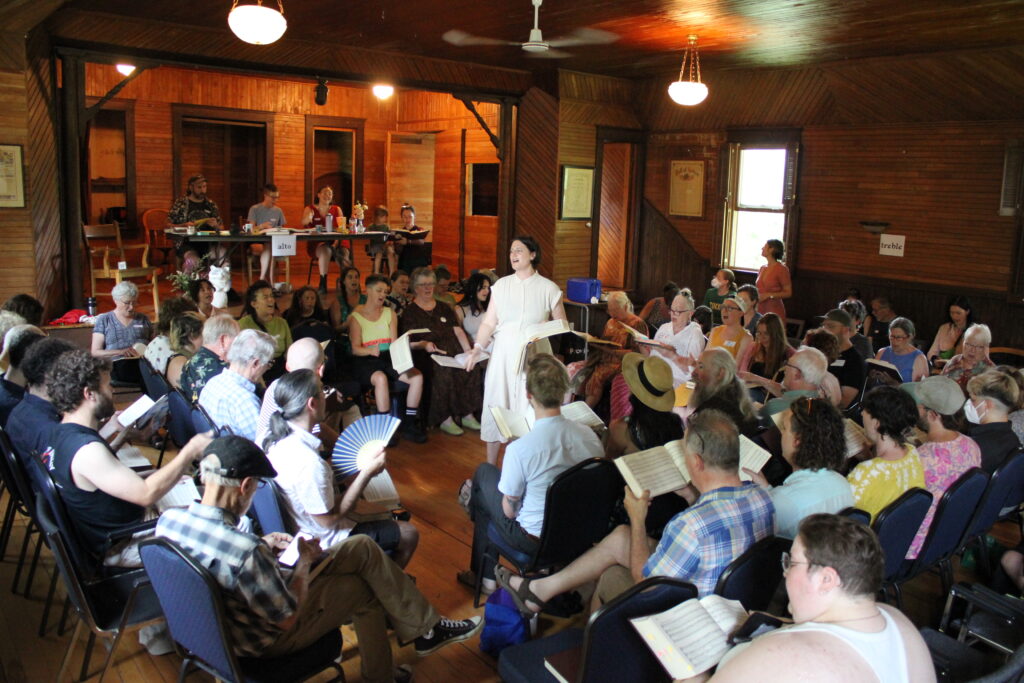

Sacred Harp is a social tradition of community singing that uses a system of musical notation called shape notes. Known for its raw harmonies, deep sense of community, and inclusive, anti-perfectionist and participatory spirit, Sacred Harp isn’t a choir: it’s just regular people, singing (loud!), for the sheer joy of it. Everyone is welcome — no matter your musical background (or lack thereof), your beliefs (or lack thereof), or your vocal skills (or lack thereof)!
No choir director, no performance, no auditions, no repetitions: no musical experience required, it’s free, and it’s open to everyone. Come and go as you please (as long as you leave your perfectionism at the door)!

This music comes from a uniquely North American tradition of singing schools, which emerged to teach everyday people how to sing with tunebooks, using shaped noteheads. This approach made music more accessible, especially in rural communities, and continues to welcome voices of all kinds today.
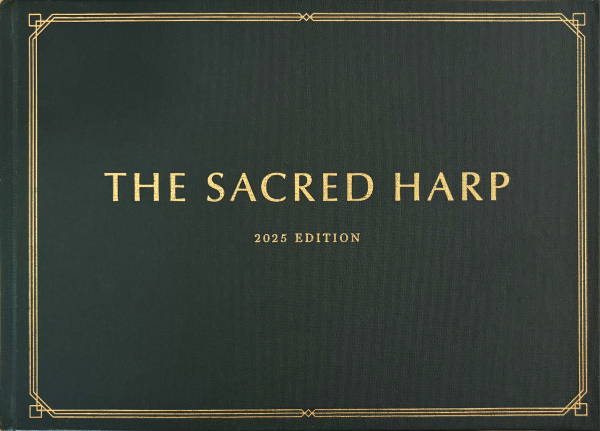
The Sacred Harp is a songbook whose first edition dates back to 1844 and uses a system of musical notation called shape notes. Developed in the early 19th century, this system was an attempt to simplify solfège and music theory as much as possible to make it easier to learn, often by people who didn’t write or read. Originating from the tradition of singing schools, shape-note singing began in Protestant congregations in the New England colonies and later took root in the Appalachian Mountains and the rural South of the United States.
This rather unique singing tradition is one of the earliest forms of American music, in its most popular sense. Although many songs, composed for the hymns of the time, address themes of God, death, heaven, and eternity, Sacred Harp singing is non-denominational, and people’s politics and faith are neither discussed nor mentioned.